

Inside Taiwan’s Fight Against Beijing’s Silent Invasion

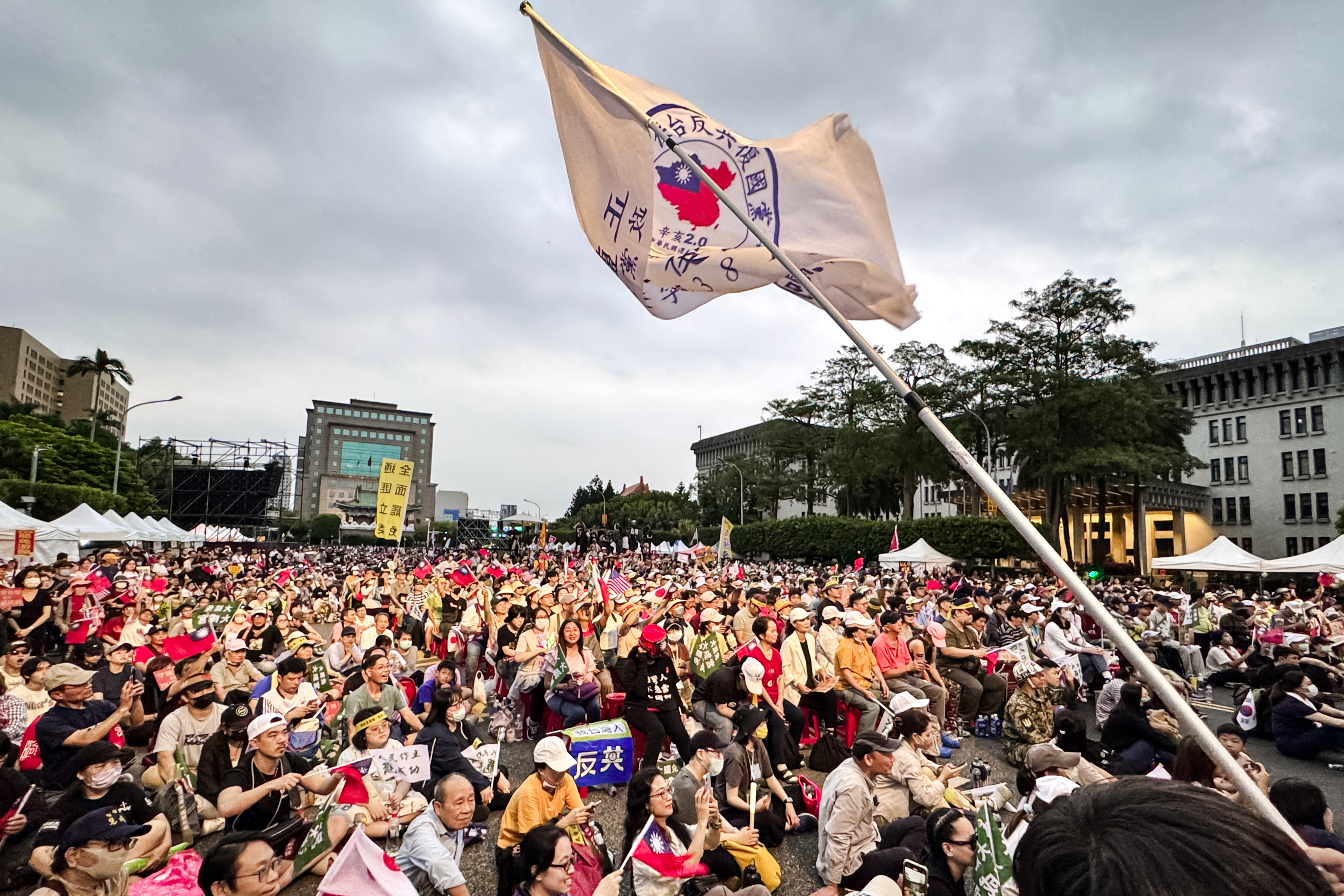
Some 100 miles off the Chinese coast, the democratic island of Taiwan has existed for decades under a creeping communist shadow.
But as the world fixates on how and when Beijing will make its move, inside Taiwan, the battle is already on. It is a war without gunfire.
Over the past few months, a grassroots movement has swept through Taiwan, aiming to remove dozens of lawmakers from a political party seen as selling out the nation’s interests to Beijing. Ultimately, two-thirds of the targeted politicians survived a recall vote on July 26, an outcome that the movement’s leaders and analysts say only underscores the depth of CCP infiltration.
The legislators are members of the opposition Kuomintang Party (KMT), known today for its pro-Beijing leaning. Leading a slim majority in the legislature, the party provoked backlash after a series of unpopular moves: slashing Taiwan’s defense budget, striking down bills that aimed to counter threats from China, and forcing through changes to expand the party’s legislative power despite mass protests. When the power grab failed in court, the KMT-led coalition imposed a procedural rule that effectively paralyzed the Constitutional Court of Taiwan.
Public anger boiled over in January, with defense spending cuts the final straw. Calls to flip the legislature, dubbed the Great Recall, bubbled up throughout Taiwan. One rally calling out communist influence drew tens of thousands of people to the streets. Approximately 1.3 million Taiwanese signed petitions to unseat one-fifth of the island’s lawmakers, all of whom are members of the KMT, in order to transfer more power to the ruling Democratic Progressive Party, which is more aligned with Western interests.
Recall advocates faced an uphill battle as they attempted to take down officials in their respective strongholds. It was an unprecedented action in Taiwanese history. Only one Taiwanese lawmaker had ever been recalled before.
Although the campaign was a “tactical defeat” on its own, on a grander scale, it was a “strategic victory,” said Miles Yu, who was a China policy adviser in the first Trump administration.
By taking the issue to the ballots, he said, voters forced KMT lawmakers to defend themselves and clarify their stance on China, and that has shifted the discourse.
“The baseline right now is really about whether you’re anti-communist or you are CCP-friendly,” he said on the “China Insider” podcast, which he hosts as director of the China Center at Hudson Institute.
Yuan Hongbing, an exiled Chinese legal scholar with insider access to Beijing’s top rung, said the turn of events represents an “awakening.”
In the face of tyranny and coercion from the Chinese regime, Taiwanese society is fighting back, he told The Epoch Times, calling the situation an “unprecedented battle.”
The KMT has tried to shake off the pro-Beijing label. It acknowledges the importance of strong defenses but continues to engage with mainland China, arguing that dialogues are crucial to calming tensions and promoting mutual benefits.
.

‘The Territory That the CCP Most Vies For’
The democratic island is small, about the size of Maryland, but it plays an outsized role in the global economy, churning out more than 90 percent of the world’s most advanced chips, according to the U.S. International Trade Commission.But that freedom is increasingly under assault.
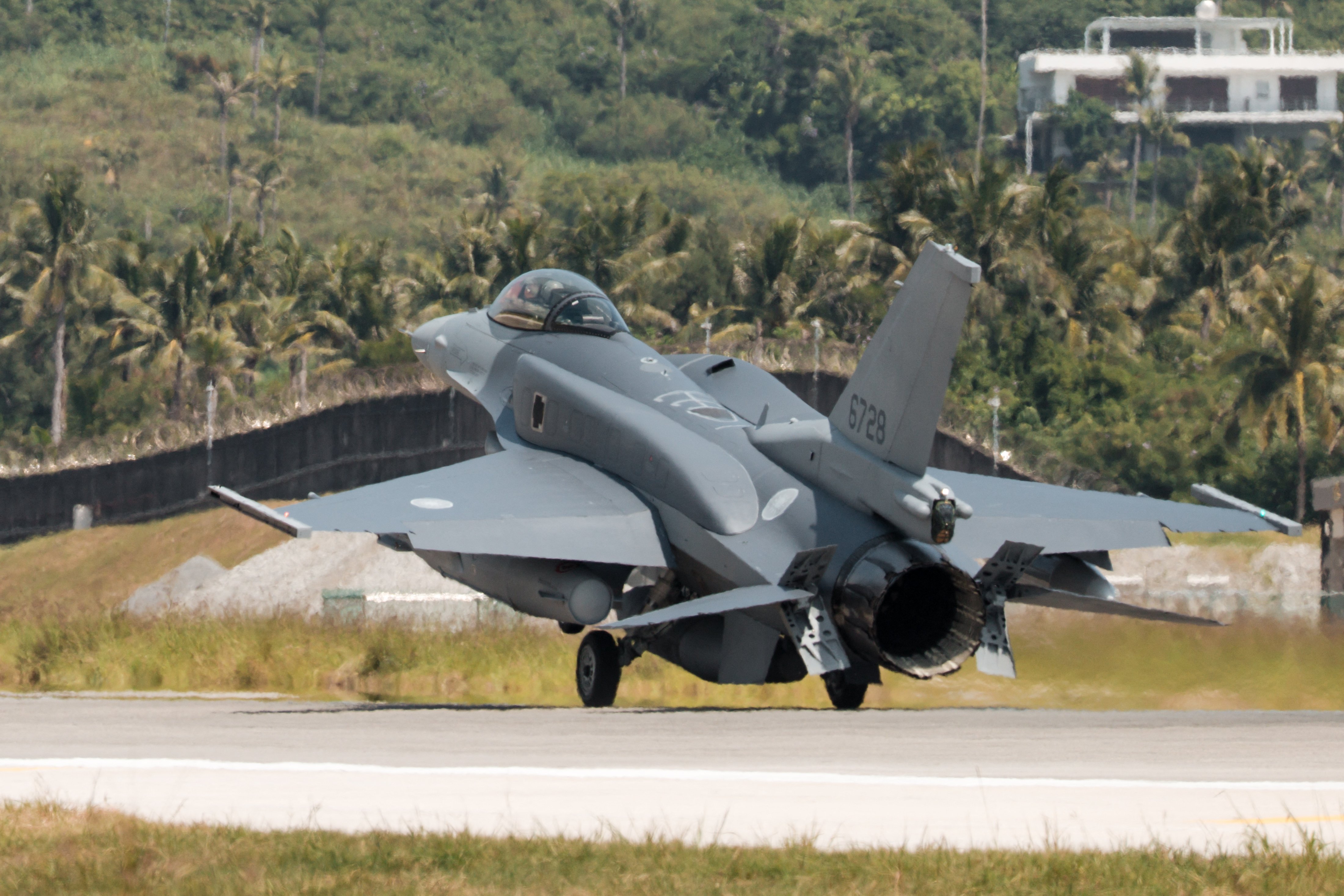
Besides conducting near daily military harassment and live fire drills around Taiwan, Beijing has been intensifying a quieter attempt to penetrate the island from within.
Since 2020, Taiwan has prosecuted 159 individuals for allegedly spying for China. Among them were 95 current or retired soldiers. With money in one hand and sticks in the other, the Chinese regime has secretly groomed informants from deep inside Taiwan’s government to feed intelligence back to China and readily open the doors to the enemy when Beijing strikes, according to Taiwan’s National Security Bureau.
In March, Taiwanese President Lai Ching-te declared mainland China a “foreign hostile force,” describing the regime’s extensive campaign to “divide, destroy, and subvert [Taiwan] from within.”
They have also recently watched CCP authorities tighten their grip on the once free-spirited Hong Kong not far away.
“Of all places in the world, Taiwan should be the staunchest against the Chinese Communist Party,” Taiwanese social media influencer Wen Tzu-yu told The Epoch Times.
“Taiwan is the territory that the CCP most vies for.”
Taiwan is a centerpiece in the first island chain, the barrier against the Chinese regime’s military aggression in the Indo-Pacific and beyond.
.

Conquering Taiwan would be the first step in a CCP campaign to take on the United States, according to Wen, who has become the face of the recall movement targeting KMT pro-Beijing lawmakers.
Yuan holds the same view.
“Annex Taiwan, and the CCP would have a gateway to expand its communist authoritarianism,” he said. “The fate of Taiwan is consequential to everyone in the 21st century.”
If Taiwan were to fall, the rest of the world, including the United States, would become more susceptible, said Rep. Nathaniel Moran (R-Texas), who sits on the House Select Committee on the CCP.
Lessons From Hong Kong
Wen said his efforts against CCP influence are motivated by the regime’s broken promise regarding Hong Kong.
Eight years ago, Wen was contemplating a career in mainland China. After graduating from college, he went on an all-expenses-paid trip to China to compete in a film competition, in which he won the third-place prize. Around him, Chinese state companies and major media platforms extended dazzling offers designed to woo Taiwanese such as him. He nearly took the bait, he said, but ended up being glad he did not.
Two years later, in 2019, protests erupted in Hong Kong as millions of people resisted a bill allowing extraditions to mainland China. As the former UK colony struggled to fend off Beijing’s encroachment, Wen saw the perils that lay ahead for his homeland, and just how close he had come to becoming a tool for the CCP propaganda machinery—one of the “useful idiots,” he said.
Wen is now known as Pa Chiung on YouTube, with 1.2 million subscribers who watch him pan Chinese propagandists and “CCP bootlickers.”
“No one was out there to warn me at the time,” he said.
.

‘Taking Taiwan With the Lowest Cost’
Despite the KMT’s close relationship with Beijing, it was once the mortal enemy of communist forces attempting to overthrow KMT’s rule; the two sides fought a fierce civil war. A decade into the war, in 1937, Japan invaded, giving the weaker communists a chance to rise while the KMT was distracted by the external foe.Japan surrendered in 1945, but by then, the KMT had few reserves left to fend off CCP leader Mao Zedong’s communists when civil war resumed. In 1949, a KMT general was persuaded to open the gates of the capital, then known as Beiping, without a fight, cementing the CCP’s victory and leading the KMT to retreat to Taiwan.
That takeover became the “Beiping Model,” the template that a Chinese general has referred to as the most desirable way to “resolve the Taiwan issue.”
The Chinese regime also cultivates political parties to spread its messaging. In January, Taiwan’s Ministry of the Interior asked the Constitutional Court to disband the China Unification Promotion Party, founded by crime syndicate boss Chang An-lo, on the grounds that the party was acting at the behest of the CCP. Prosecutors accused a couple affiliated with the party of spreading Chinese propaganda in exchange for cash, and sentenced another three people in March for recruiting military spies.
.


Chen knew the CCP playbook firsthand. Born in 1999, he learned martial arts at China’s Shaolin Temple at age 13 and later enrolled in Huaqiao University, a school for overseas students overseen by the United Front Work Department. The propaganda was so successful that Chen considered himself a Chinese patriot. His cellphone’s background wallpaper was a picture of Chinese leader Xi Jinping.
Reality Bites
Three men named in the viral film for holding dual identities have since lost their Taiwanese status. In a wider investigation that followed, Taiwan’s Defense Ministry cut off military intelligence access to dozens of active-duty military members for also holding residency permits in China. Taiwan’s immigration officials also deported three Chinese influencers who immigrated through marriage, citing their videos supporting China’s military unification of the territory.While Chinese authorities have touted the mainland as “wonderful, advanced, and safe,” a place that the Taiwanese would want to return to repeatedly, the regime has also been quick to turn its back on its supporters once their value has dried up.
Zhao Chan, better known by her online alias Xiaowei, is one of the three mainland Chinese forced to return to China.
In a twist of irony, three months after going back to her hometown in China’s Guizhou Province, Zhao found herself going head-to-head with village officials. The state-run reservoir had flooded parts of the village, and she was entitled to damage compensation, she said. After a fruitless back-and-forth, she aired her grievances online, only to see her videos deleted. The police woke her up with a midnight phone call, warning her to not step out of bounds.
What happened to Zhao could happen to anyone, said Xiaofang, a mainland Chinese who lived in Taiwan for three decades after getting married.
“A lot of people think if they toe the Communist Party line, the CCP will give them special favors—it’s simply impossible,” she told The Epoch Times.
Such people, she said, “don’t understand the true nature of the Chinese Communist Party.”
It is easy to fall into the trap, according to Rep. Carlos Giménez (R-Fla.). The United States has long thought China “benign” and has only belatedly “woken up” to the reality, he told The Epoch Times.
.

“The Chinese have a way of painting a really nice picture of who they are, but it’s all a facade—you’ve got to look behind the wall and look behind the curtain to see the reality of what China really is,” Giménez said.
‘Can’t Let This Go’
Wen said he is readying himself for the worst: the day when he might need to pull the trigger in the battlefield.Because of the strict gun restrictions in Taiwan, he drills at a gun range in the United States.
“It’s a day I’m preparing for every moment, even though I don’t want it to ever come,” he said.
But his chief focus is the here and now.
Since the documentary came out, the Taiwan Affairs Office in Beijing has named Wen three times in press briefings. It has labeled him—and other vocal critics of the CCP in Taiwan—as “anti-China,” and has vowed retaliation.
Wen is unmoved.
“They intentionally confuse China with the Chinese Communist Party,” he said. “I’m not anti-China, I’m anti-CCP.”
.

In response, Wen simply pins the most provocative comments on top.
“It’s just hilarious,” he said. “The comment may have 1,000 likes, but underneath, all the replies are negative.”
Chinese nationalists have posted clips of the documentary on Douyin, China’s version of TikTok, and lampooned him. Wen said he is proud of it. People who never heard of him may get curious and circumvent China’s censorship wall to check him out. And if he can make even a handful of people become “clearheaded,” he said, he will have succeeded.
Wen admitted to feeling tired but said he “just can’t let this go.”
“Just look at Hong Kong,” he said. “I don’t want Taiwan to become like that.”
.
What's Your Reaction?
 Like
0
Like
0
 Dislike
0
Dislike
0
 Love
0
Love
0
 Funny
0
Funny
0
 Wow
0
Wow
0
 Sad
0
Sad
0
 Angry
0
Angry
0














Comments (0)