

China’s Trade Surplus Surges to Record $1.2 Trillion—Where Are the Goods Going?


.
China posted a record annual trade surplus of $1.2 trillion in 2025 as Beijing navigates a slowing economy at home and President Donald Trump’s sweeping global tariffs.
Exports advanced 6.6 percent in December from a year earlier, rising from the 5.9 percent increase registered in the previous month, according to Chinese customs data released on Jan. 14. This was higher than the market estimate of 3 percent.
Effects from U.S.-China trade strife were evident in the economic data.
Exports to the United States declined by 30 percent year over year in December—the ninth consecutive monthly drop.
This decrease was partially offset by a 12 percent jump in shipments to the European Union and an 11 percent expansion in exports to the Association of Southeast Asian Nations. Exporters have been accelerating deliveries to non-U.S. markets amid elevated tariffs.
For the full year, exports climbed 5.5 percent.
The average U.S. tariff rate on Chinese goods entering the United States is 47.5 percent, reflecting the temporary trade deal between the world’s two largest economies.
This past fall, the United States and China agreed to roll back a series of export-control measures and higher tariffs in a one-year trade agreement.
Imports surged 5.7 percent year-over-year last month, representing the highest amount since September 2024.
From November to December, imports from the United States fell 29 percent year over year.
Diversifying Trade
In recent years, China has been diversifying international trade, particularly with many Asian emerging markets.This is something that many market watchers and policymakers are overlooking in 2026, says Eric Clark, CIO of Accuvest Global Advisors.
“The region has 60 percent of the world’s population with generally favorable demographics,” Clark said in a note emailed to The Epoch Times.
“China may be losing the United States as a supply chain customer, but Asian countries trading more with Asia is a major theme that most in the United States are not talking about or positioned for.”

At the same time, U.S. officials have expressed concern surrounding transshipped goods.
U.S. trade representatives have made this the center of their agreements and negotiations with Southeast Asian countries.
Although Beijing has been pursuing the expansion of trade destinations, others are also seeking to bolster their partnerships with China—and rely less on the United States.
Ottawa will allow up to 49,000 Chinese electric vehicles at a 6.1 percent tariff, sharply down from the 100 percent levy imposed by his predecessor in 2024.
In exchange, China will reduce its levies on Canada’s canola seed to 15 percent.
The prime minister also told reporters that Canadian exports of canola meal, crabs, lobsters, and peas will no longer be subjected to anti-discrimination tariffs in March.
Navigating Tariffs While Boosting Demand
Criticisms over Beijing’s ongoing trade surplus have intensified over the past year.International Monetary Fund chief Kristalina Georgieva urged China to transition from export-dependent economic growth and adopt measures to bolster domestic consumption.
Others, including Treasury Secretary Scott Bessent, have echoed these concerns.
A core objective behind the U.S. administration’s trade agenda is to shift global trade. The United States desires to reindustrialize, with China and the rest of the world becoming consumers.
Looking ahead to 2026, the national annual inflation rate is forecast at 0.9 percent—well below the 2 percent target maintained by central banks worldwide—according to Lynn Song, ING’s chief economist of Greater China.
This could further support policy easing.
Policymakers have employed a mix of interest rate cuts, targeted lending programs, liquidity tools, and reductions in the reserve ratio to address weaknesses and reverse structural vulnerabilities.
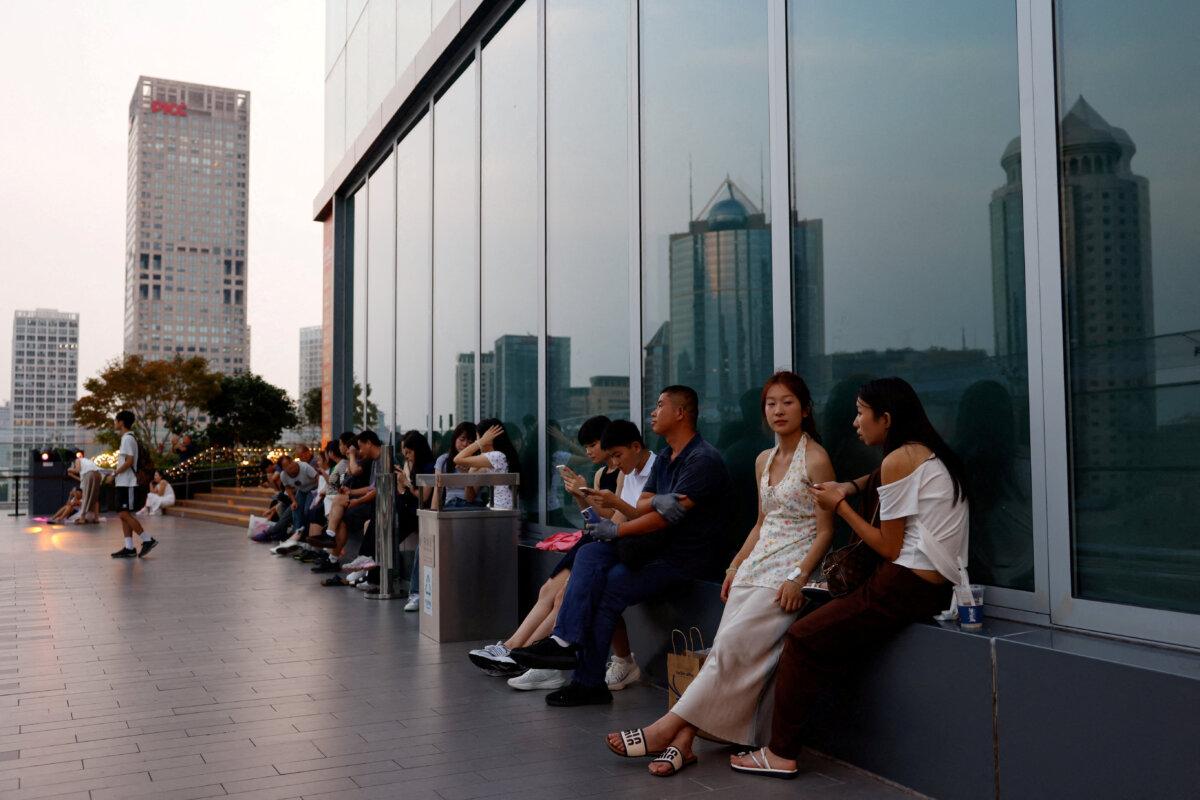
It is unclear if this will be enough to sustain long-term growth prospects, as experts have presented bearish expectations for China’s economy.
.
Growth is also projected to further soften to 4.2 percent in 2027.
Expectations for slowing growth are owed “to subdued demand amid an ongoing structural slowdown,” the World Bank said.
“Subdued consumer confidence, the property sector slump, and a softer labor market are expected to restrict growth,” the report stated.
“Manufacturing investment is anticipated to slow, owing to uncertainty regarding policies aimed at addressing supply-demand imbalances in some sectors, which is putting pressure on profitability. Subdued domestic demand is also expected to maintain downward pressure on consumer and producer prices.”
Producer deflation came in at an annual rate of 1.9 percent in December—almost in line with the market consensus—up from the previous month’s reading of 2.2 percent.
.
What's Your Reaction?
 Like
0
Like
0
 Dislike
0
Dislike
0
 Love
0
Love
0
 Funny
0
Funny
0
 Wow
0
Wow
0
 Sad
0
Sad
0
 Angry
0
Angry
0














Comments (0)