

Generals and Diplomats Sound the Alarm: AI Is Now Moving Faster Than Governments Can Control It
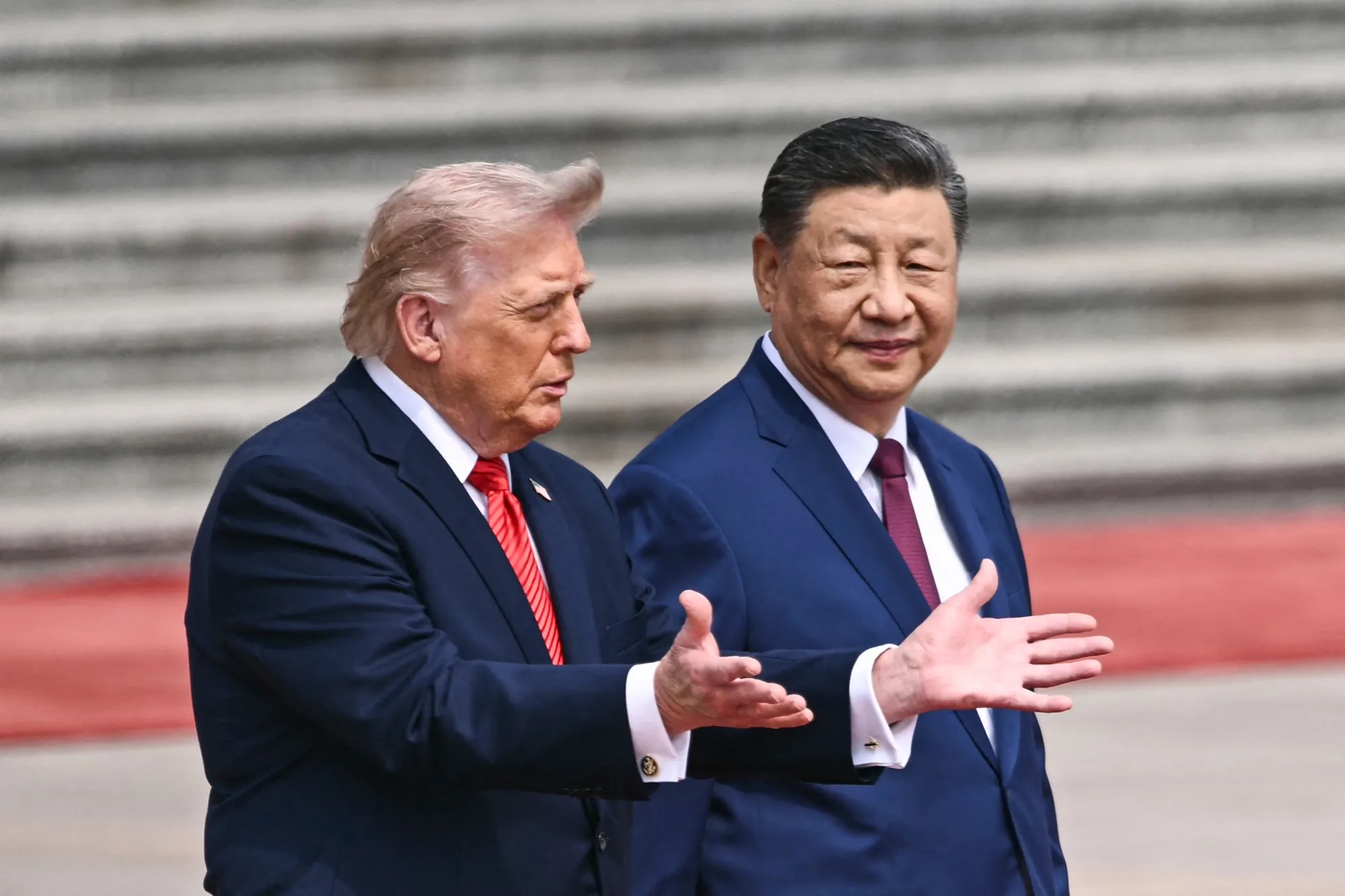
At China's largest annual defense conference, officials from dozens of nations warned that artificial intelligence is compressing military decision-making to dangerous speeds. The warnings land just days before a high-stakes summit between US President Donald Trump and China's Xi Jinping, where the world's two AI superpowers will try once again to agree on keeping the technology away from nuclear launch decisions.

.
A Room Full of Warnings in Beijing
Nearly 2,000 military officers, diplomats, and academics from about 100 countries gathered in Beijing this week for the Xiangshan Forum, China's flagship security conference. The three-day event, which wrapped up on Thursday, brought together an unusually mixed crowd: regional defense officials, a senior Pentagon representative, Russian academics, a North Korean vice defense minister, and even delegates from Afghanistan's Taliban government.
Despite their differences, many delegates converged on one theme: artificial intelligence is now moving faster than the world's ability to manage it.
Thailand's Defence Minister, Adul Boonthumjaroen, put it starkly. "Today, the world is at a critical turning point," he told the forum, adding that as AI reshapes warfare, "the most pressing [question] is not who will be the most powerful, but rather, how can we build an international order."
Pakistan's Defense Secretary, Muhammad Ali, echoed the concern, warning that new technology is "compressing the strategic timeline." He added that AI accelerates decision-making just as disinformation can shatter public trust before governments even have a chance to respond. Delegates from Bangladesh, Malaysia, and Laos raised similar worries.
.
Drones, Autonomy, and a Blurring Battlefield
Jürg Lauber, vice-president of the International Committee of the Red Cross, told the forum that preserving human judgment over the use of force is becoming more urgent as weapons systems grow more autonomous. He also pointed to a quieter shift already underway on real battlefields: the rise of cheap, mass-produced drones, which he said is stretching and blurring front lines over vast distances.
That shift is not theoretical. Military analysts have long noted that most drones in service today are still remotely piloted rather than fully autonomous — but the technology to change that is advancing quickly, and the legal and ethical rules have not kept pace.
.
Two AI Superpowers, Two Different Playbooks
The Beijing forum unfolded just a week before an expected September 24 summit in Washington between Trump and Xi, where AI is set to be a central topic alongside trade, chips, and rare earth minerals. The two countries agree the risks are real. They disagree sharply on how to handle them.
China's Defence Minister, Dong Jun, opened the forum by calling on nations to "strengthen risk assessment, experience-sharing and rule-making" in emerging domains including AI, outer space, and the deep sea. Vice President Han Zheng made a similar appeal a day earlier, calling for faster global governance rules and broader international cooperation.
It's a message aimed at reassuring the world that Beijing wants guardrails. But it sits awkwardly next to China's own record. Beijing has spent years building one of the most extensive AI-powered surveillance systems in the world, used domestically to monitor and suppress minority groups such as Uyghurs in Xinjiang, as well as spiritual communities like Falun Dafa practitioners, who have faced systematic persecution since 1999. A recent report from AI company Anthropic also described attempts by operators believed to be linked to Chinese state and military interests to misuse commercial AI models for surveillance purposes — allegations Beijing has rejected. Calls for "trustworthy" global AI rules carry less weight when the same government is simultaneously expanding AI-driven repression at home.
On the American side, President Trump has taken a different tack, dismissing calls from AI researchers to slow development as overblown. "We're leading China in AI ... and frankly, I want to keep it that way, because whoever wins AI wins," he said ahead of the summit. His administration's position is that staying ahead of Beijing, not pausing, is the safest path — a stance that has drawn criticism from some AI safety researchers but reflects a pragmatic bet that unilateral restraint would only hand China an advantage.
.
The Nuclear Question Nobody Wants to Get Wrong
The most sensitive issue is what happens if AI gets anywhere near nuclear command systems. Security experts from both countries — including Melanie Sisson of the Brookings Institution and Tianjiao Jiang of Fudan University, who take part in an ongoing US-China dialogue that feeds into official talks — recently proposed a set of "nuclear-style" safeguards. These include firm red lines around nuclear command networks, guaranteed human control over any cyberattack with serious consequences, and a dedicated hotline for incidents involving autonomous AI systems.
The logic behind the hotline is simple but urgent: an AI system defending one country's network might automatically respond to what looks like an attack, while the other side interprets that response as deliberate aggression — and retaliates before anyone understands what actually happened. A hotline would let one government tell the other, in real time, that an unusual AI action was accidental or still under investigation.
Not everyone is convinced such tools would work. Carla Freeman of Johns Hopkins University's School of Advanced International Studies has questioned how useful existing US-China military hotlines actually are in a crisis, given how rarely they've been used effectively in the past. Meanwhile, China's State Security Minister, Chen Yixin, wrote this week that AI "fundamentally transforms the form of military struggle" — language that underscores how central the technology has become to Beijing's own military thinking, even as its diplomats call for restraint.
.
What Comes Next
Both governments now head into the September 24 summit carrying competing instincts: a shared fear that AI could trigger a catastrophic miscalculation, and a shared unwillingness to fall behind in the race to build it. Unlike nuclear arms control, which dealt with physical warheads and enrichment plants that leave visible signatures, AI lives in software and data — making any agreement far harder to verify.
Analysts expect the summit to produce, at best, narrow and specific commitments — such as agreed red lines on nuclear systems — rather than a sweeping framework. For now, the warnings voiced in Beijing this week stand as a rare point of agreement between rivals: the technology is moving faster than the diplomacy meant to contain it.
.
What's Your Reaction?
 Like
0
Like
0
 Dislike
0
Dislike
0
 Love
0
Love
0
 Funny
0
Funny
0
 Wow
0
Wow
0
 Sad
0
Sad
0
 Angry
0
Angry
0










Comments (0)