

China Plays Peacemaker in Iran-US Standoff — But Its Real Prize Is Oil
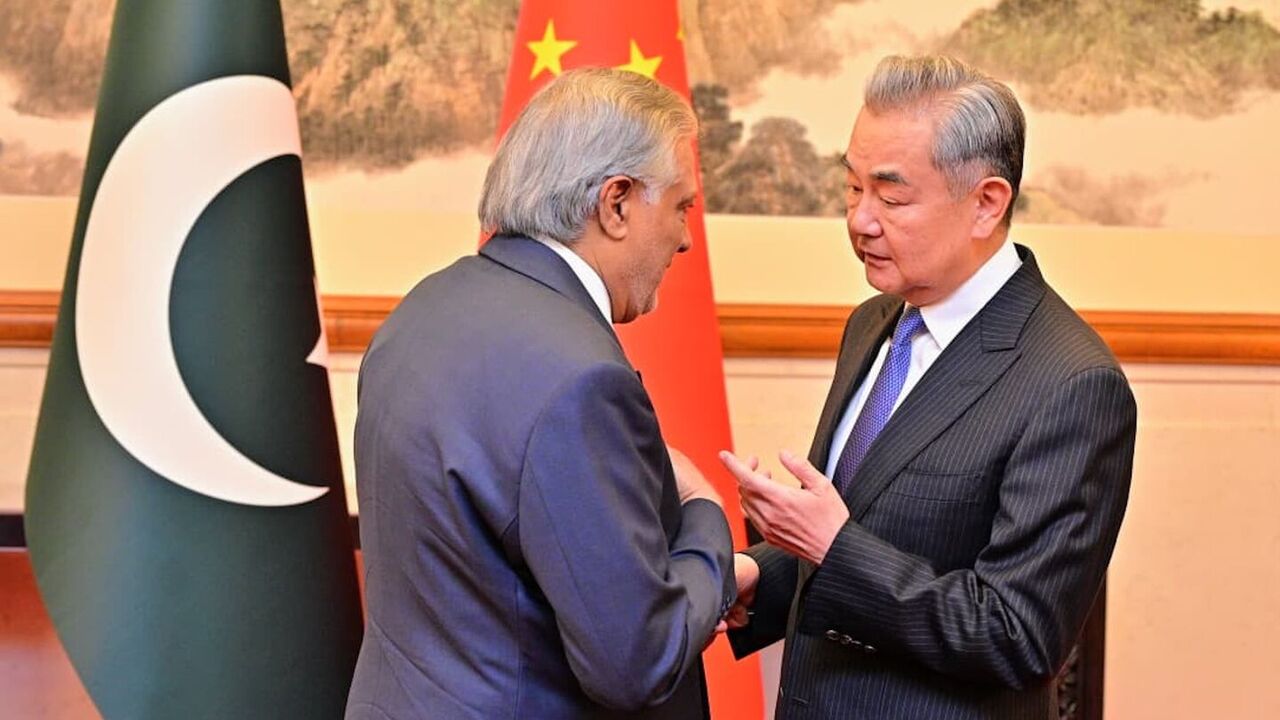
China's top diplomat Wang Yi met Iran's foreign minister in Beijing on September 16, urging both Tehran and Washington to return to the negotiating table and reopen the Strait of Hormuz. The meeting comes days before a high-stakes summit between Xi Jinping and Donald Trump, and against the backdrop of a war that has gripped the Gulf since February. Behind Beijing's calls for "restraint" lies a harder calculation: protecting its access to cheap Iranian oil, even at the cost of openly defying US sanctions.

.
A One-Day Visit With High Stakes
Iranian Foreign Minister Abbas Araghchi flew into Beijing on Wednesday for a one-day visit, his first face-to-face meeting with Chinese counterpart Wang Yi since the war between Iran and the US-Israeli coalition erupted in February. Wang urged both Tehran and Washington to "remain rational, exercise restraint" and return to the so-called Islamabad memorandum, a framework reached earlier in the conflict, to resume "substantive consultations."
Wang also called for immediate steps to reopen the Strait of Hormuz, the narrow waterway through which roughly a fifth of the world's oil and gas once flowed before Iran restricted passage. He added that Beijing did not want the crisis to spread further into Yemen and the Red Sea, where Iran-aligned Houthi forces have escalated attacks on Saudi Arabia and seized parts of the Bab el-Mandeb Strait.
.
Context: A War That Has Battered the Gulf Since February
The current crisis traces back to February 28, when the United States and Israel launched a bombing campaign against Iranian military and nuclear sites, an offensive that included the killing of Iran's Supreme Leader, Ali Khamenei. Iran responded by effectively sealing the Strait of Hormuz to shipping it deemed hostile, mining sections of the waterway and threatening tankers.
Washington later imposed a naval blockade on Iranian ports and escorted commercial vessels through the strait, while Tehran continued to bar ships linked to the US and Israel. The US Department of Defense has estimated the cost of the war at more than $33 billion, with hundreds of buildings and dozens of aircraft damaged at American bases across the region. The fighting has driven up global energy prices and disrupted supply chains that many countries, China included, depend on heavily.
.
China's Real Interest: Oil, Not Just Peace
Beijing's public messaging casts itself as an evenhanded mediator. But its actions tell a more self-interested story. China is the world's largest buyer of Iranian crude, and its independent "teapot" refineries — smaller, private processors that account for a large share of the country's oil imports — have continued purchasing discounted Iranian oil throughout the war.
When the US Treasury sanctioned five of these refineries earlier this year for buying Iranian crude, Beijing did not fall in line. Instead, China's Ministry of Commerce invoked its "Blocking Rules" for the first time since they were introduced five years ago, formally ordering Chinese companies to ignore the American sanctions altogether. Analysts described the move as a direct challenge to US extraterritorial enforcement, and a sign that Beijing is prepared to shield its Iran oil trade even as it calls publicly for de-escalation.
That pattern has continued into September: fresh US sanctions targeting a terminal used by state refining giant Sinopec, announced just ahead of the Xi-Trump summit, underscore how tightly China's energy interests remain tied to Iran — and how little Beijing's rhetoric about "restraint" has changed its underlying behavior.
.
The Trump-Xi Summit Looms
The Beijing meeting between Wang and Araghchi comes exactly a week before Xi Jinping is expected in Washington for a summit with President Trump on September 24 — a visit that was delayed by more than a month because of the Iran war. Trump has pressed Beijing to use its leverage over Tehran to force open the Strait of Hormuz and rein in Iran's threats to shipping.
For Xi, hosting Araghchi just before flying to Washington allows China to appear as a stabilizing power on the world stage, without having to make any binding commitments. It also gives Tehran a chance to lock in Chinese diplomatic and economic backing before Xi sits down with Trump — support Iran will need if it hopes to avoid further isolation.
.
Outlook
Little suggests Wang's appeal for "restraint" will translate into a genuine breakthrough. Iran has shown no sign of fully reopening the strait, and China has demonstrated that it is willing to shield its own oil trade from US sanctions rather than pressure Tehran into compliance. The coming Xi-Trump summit will be the real test of whether Beijing is prepared to trade some of its Iran ties for progress with Washington — or whether Wednesday's meeting in Beijing was mostly diplomatic theater ahead of the cameras.
.
Sources
- Reuters — "China's top diplomat urges Iran, US to show restraint, revive talks," September 16, 2026: https://www.reuters.com/world/china/chinas-top-diplomat-urges-iran-us-show-restraint-revive-talks-2026-09-16/
- South China Morning Post — "The US sanctioned Chinese oil refineries. Now China is really pushing back": https://www.scmp.com/news/china/diplomacy/article/3352278/us-sanctioned-chinese-oil-refineries-now-china-really-pushing-back
- Al Jazeera — "China blocks US sanctions against five 'teapot' refineries": https://www.aljazeera.com/economy/2026/5/3/china-blocks-us-sanctions-against-five-teapot-refineries
- Reuters via Yahoo Finance — "Latest US sanctions on Iranian oil deal blow to China's Sinopec": https://finance.yahoo.com/news/latest-us-sanctions-iranian-oil-120641837.html
- CNBC — "Weapon shortfalls, 'hundreds' of buildings and aircraft damaged, $33.4 billion spent": https://www.cnbc.com/2026/09/15/us-iran-war-trump-hormuz-munitions-dod-costs-aircraft.html
.
What's Your Reaction?
 Like
0
Like
0
 Dislike
0
Dislike
0
 Love
0
Love
0
 Funny
0
Funny
0
 Wow
0
Wow
0
 Sad
0
Sad
0
 Angry
0
Angry
0











Comments (0)